Nvidia's AI Power Play, Tesla's Valuation Debate, Airbus's Supply Chain Snag, and Yen Carry Trade Unwind Fears
Pre-Market Daily Brief: Cautious Open Amid AI Momentum and Global Jitters
Good morning, active traders. As we head into Monday's session on December 1, 2025, global markets are poised for a choppy start, with sentiment leaning cautious due to fresh concerns over monetary policy tightening in Japan and sector-specific headwinds in autos and aerospace. The yen carry trade unwind fears are rattling bonds and equities, potentially amplifying volatility across Asia-Pacific and spilling into U.S. futures. On a brighter note, AI continues to drive bullish narratives, led by Nvidia's expansive dealmaking, which could bolster tech-heavy indices like the Nasdaq. Overall, we're seeing a mixed bag: downside pressure from overvaluation calls on high-flyers like Tesla and operational snags at Airbus, offset by resilient AI investments signaling long-term growth in semiconductors and software. Expect pre-market futures to dip slightly—Dow down 0.3%, S&P 500 flat, Nasdaq up 0.2%—as investors digest weekend headlines. Here's the breakdown of the most market-moving stories from an investor's lens, focusing on potential trading opportunities and risks.
Tesla Under Fire: Burry's Bearish Bet Reignites Valuation Debate
Michael Burry, the legendary "Big Short" investor known for prescient calls like the 2008 housing crash, is back in the spotlight—and he's zeroing in on Tesla. In a recent filing and public statement, Burry labeled the EV giant "ridiculously overvalued," arguing its market cap has been detached from fundamentals for far too long. This comes amid Tesla's shares trading at nosebleed multiples—currently around 100x forward earnings—fueled by AI-driven optimism around autonomous driving and robotaxis, but weighed down by softening EV demand, intensifying competition from BYD and legacy automakers, and Elon Musk's polarizing distractions.
From a trader's perspective, Burry's commentary could catalyze short-term selling pressure. Tesla's stock has surged over 50% YTD on AI hype, but recent delivery misses (Q3 2025 figures showed a 5% YoY decline) and margin compression from price cuts are cracking the narrative. Watch for put/call ratios to spike if volume picks up; options traders might eye the $350 strike for downside protection. Broader impact? This reinforces rotation away from mega-cap growth names toward value plays, potentially dragging the Magnificent Seven and pressuring consumer discretionary ETFs like XLY. If Burry discloses a short position in his next 13F (due soon), expect amplified volatility—position accordingly before the bell.
Airbus Tumbles on Supply Chain Scare: Aerospace Sector in Crosshairs
European planemaker Airbus is making waves for all the wrong reasons, with shares plunging as much as 10% in early Monday trading after confirming a "quality issue" in the fuselage panels of its flagship A320 narrowbody jets. The problem affects a limited batch from a key supplier, potentially delaying dozens of deliveries to major airlines like Delta and Lufthansa through Q1 2026. This isn't just a hiccup—Airbus relies on the A320 family for over 60% of its order book, and any snag risks eroding its edge over Boeing, which is still recovering from its own 737 MAX woes.
Investors should note the ripple effects: Airbus (EADSY) is down 8% pre-market, dragging the STOXX Europe 600 Aerospace & Defense index lower by 2%. This highlights persistent supply chain fragility in industrials, exacerbated by post-pandemic labor shortages and raw material inflation. Trading angle? Short-term bears could target calls on Airbus or related suppliers like Spirit AeroSystems; longer-term, this might create a dip-buying opportunity if resolved swiftly, as global air travel demand remains robust (IATA projects 4.5% passenger growth in 2026). Keep an eye on Boeing (BA) for sympathy moves—it's up 1% in sympathy but vulnerable if regulatory scrutiny intensifies. Broader market tie-in: This adds to inflationary pressures in capex-heavy sectors, potentially pressing European equities and the euro.
Yen Carry Trade Fears Resurface: BOJ Policy Shift Stokes Global Volatility
Markets are on edge as Japan's Bank of Japan (BOJ) signals potential rate hikes, reigniting worries about the unwind of the yen carry trade—a strategy where investors borrow cheap yen to fund higher-yield assets worldwide. The BOJ's hawkish tone, including hints at ending negative rates by mid-2026, has the yen strengthening 2% against the dollar overnight, squeezing leveraged positions and sparking selloffs in U.S. Treasuries and equities. We've seen this movie before: The August 2024 unwind wiped $500B in value; a repeat could amplify current jitters around U.S. Fed pivots and election-year uncertainty.
For active traders, this is volatility gold. Nikkei futures are down 1.5%, and the trade could pressure risk assets—watch USD/JPY below 150 for further yen strength, which might clip exporters like Toyota and Sony. U.S. implications? Emerging market ETFs (e.g., EEM) and high-beta tech could see outflows; pair this with VIX spikes for hedging plays. Positively, a stronger yen might ease imported inflation for Japan, supporting consumer stocks there. Overall, this underscores diverging global policies—Fed cuts vs. BOJ hikes—setting up currency cross-trades as a key theme for December.
Nvidia's $2B AI Power Play: Synopsys Deal Fuels Chip Rally
Cutting through the noise, Nvidia is doubling down on its AI empire with a landmark $2 billion investment in Synopsys (SNPS), a leader in electronic design automation (EDA) software critical for chip development. The deal includes Nvidia buying Synopsys stock and deepening collaboration on AI-accelerated tools for faster, more efficient semiconductor design—think next-gen GPUs for data centers and edge computing. Nvidia CEO Jensen Huang called it a "strategic partnership to supercharge AI innovation," building on prior ties with AMD and TSMC.
This is bullish nitro for the AI trade. Nvidia (NVDA) is up 3% pre-market, with Synopsys jumping 5%, potentially lifting the semiconductor index (SOXX) by 1-2%. Investors: This validates Nvidia's moat amid U.S.-China tensions and export curbs; watch for follow-through in peers like Cadence Design (CDNS) and Arm Holdings (ARM). Trading tip—bull call spreads on NVDA could capture upside if AI capex from hyperscalers like Microsoft stays hot (projected $100B+ in 2026). Downside risk? Overhype if AI adoption slows, but for now, it's a counterweight to broader market wobbles.
AI Job Disruption Looms: Yang's Warning Adds Long-Term Caution
Entrepreneur Andrew Yang, who famously flagged automation risks in his 2020 presidential run, is sounding alarms again: AI could displace 40 million U.S. jobs over the next decade, hitting white-collar roles in tech, finance, and media hardest. Citing rapid advances—like Google's Veo and OpenAI's Sora generating hyper-realistic videos (e.g., the viral Will Smith "spaghetti test" evolution from glitchy 2023 clips to seamless 2025 renders)—Yang urges policy prep, including universal basic income pilots.
Market impact? This tempers AI euphoria, potentially capping valuations for software giants like Adobe (ADBE) and Salesforce (CRM) as labor cost savings clash with unemployment fears. Traders: Volatility in AI ETFs (e.g., BOTZ) could rise if job data softens; pair with defensives like utilities. Long-term, it's a buy-the-dip signal for AI enablers, but expect regulatory noise from Washington.
In summary, today's pre-market vibe is defensive—trim growth exposure on Tesla/Airbus weakness, lean into AI via Nvidia/Synopsys, and hedge yen-driven swings. Key levels: S&P support at 5,800, resistance at 5,900. Stay nimble, subscribers—volatility is your edge. Trade smart.
Gain Your Edge: The Tools That Power Pro-Level Analysis
In the market, the right tools separate the professionals from the crowd. We've identified the game-changing platforms that deliver institutional-grade data, faster execution, and deeper insights. Elevate your strategy from guesswork to a high-performance system with the same resources used by top market analysts.
The Charting Platform We Use Every Day
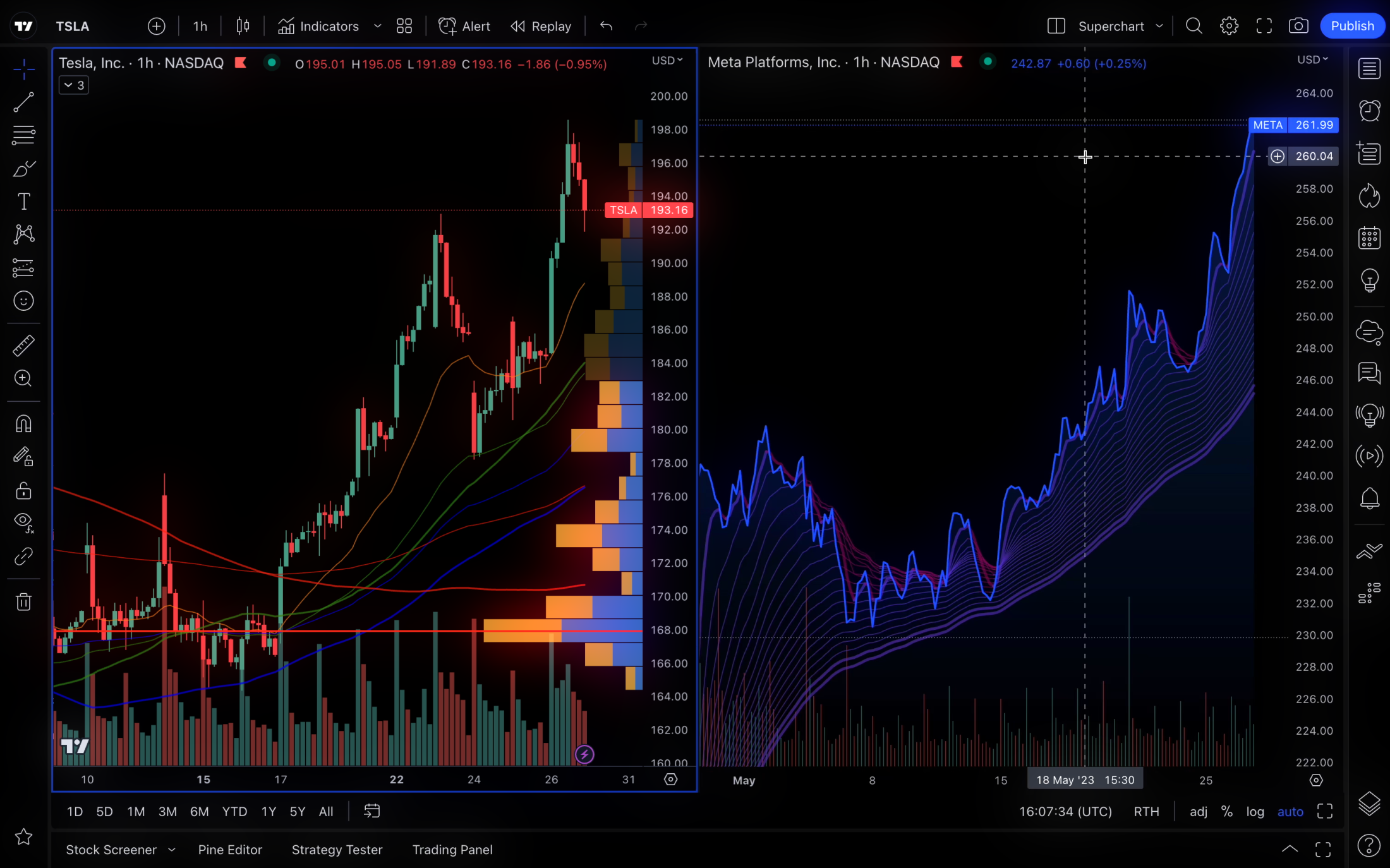
Effective market analysis requires professional-grade tools. TradingView offers best-in-class live charts, hundreds of pre-built indicators, and advanced drawing tools for stocks, crypto, and forex. It's the essential platform our analysts rely on to identify trends and track market shifts.