Iran War Fuels Oil Fears and Equity Sell-Offs, US Jobs Rebound, AI Boom
Pre-Market Daily Brief: March 29, 2026 – Volatility Persists as Iran War Fuels Oil Fears and Equity Sell-Offs
Good morning, active traders. As we head into Friday's session, global markets remain on edge following last week's brutal downturn—the worst since the Iran conflict escalated earlier this month. The S&P 500 shed 2.5%, the Nasdaq entered correction territory with a 4.1% drop, and the Dow tumbled 1.8%, capping a week marked by whiplash over potential peace talks and relentless oil price surges. Investors are grappling with the erosion of the so-called "Trump put"—the market's prior faith in quick political resolutions—which now feels like a distant memory amid conflicting signals from Washington. Overall sentiment is bearish on equities, with heightened geopolitical risks pushing safe-haven flows into gold and bonds, while rising energy costs threaten inflation and corporate margins. Yet, pockets of resilience shine through: a projected US jobs rebound could bolster economic optimism, and AI-driven innovations in China signal long-term growth potential. Here's the breakdown of the most market-moving developments, enriched with key context for your trading decisions.
Equities in Turmoil: Worst Week Signals Shift in Risk Appetite
Last week's market carnage was no accident. Three stark stats underscore the pain: the Nasdaq's correction (down over 10% from its February peak) was exacerbated by tech heavyweights like NVIDIA and Tesla, which fell 6% and 5% respectively on fears that prolonged Middle East tensions could disrupt supply chains and AI chip demand. Oil's climb above $90 per barrel—up 8% for the week—amplified recession worries, as higher input costs squeeze consumer spending and airline profitability. The "Trump put" faded as a 7:23 a.m. post from former President Trump on social media hinted at tough negotiations with Iran, spooking dip-buyers and triggering algorithmic sell-offs.
From an investor lens, this volatility is a double-edged sword. Eddie Ghabour, CIO at Key Advisors Wealth Management (managing $1 billion), has aggressively de-risked, selling 70% of his firm's equity holdings to build a massive cash pile—now over 50% of assets. In an interview, Ghabour emphasized waiting for "clarity on the Iran front," eyeing opportunities in undervalued cyclicals like industrials if oil stabilizes below $85. He's targeting a V-shaped recovery but warns of further downside if Brent crude tests $100, potentially dragging the S&P to 4,800. Pre-market futures are pointing to a soft open: Dow futures -0.3%, S&P -0.4%, Nasdaq -0.6%. Watch the VIX, hovering near 22—any spike above 25 could accelerate rotations out of growth stocks into defensives like utilities and healthcare.
Commodities Corner: Gold Holds Firm, Oil's War Premium Looms Large
Gold's bull run—intact for three years—teetered on the brink of a bear market last week, plunging 5% to $2,450/oz amid profit-taking and a stronger dollar. But opportunistic dip-buyers have emerged, pulling prices back to $2,510 in after-hours trading. Central bank activity is the tailwind: while Turkey offloaded some reserves (a rare outright sale that rattled sentiment), overall demand remains robust, with the World Gold Council noting Q1 2026 purchases already at 250 tonnes—up 15% year-over-year. For traders, this resilience suggests gold ETFs like GLD could see inflows if equity weakness persists; target $2,600 if Fed rate cut odds (now at 65% for June per CME FedWatch) materialize.
Oil tells a darker tale. The Iran war's prolongation has heightened supply risks, with Brent futures settling at $92.50— the highest since 2022. Australia's move to underwrite private fuel purchases (via new powers under the Fuel Security Act) is a direct response, aiming to secure 3-6 months of strategic reserves amid Middle East disruptions. Bloomberg data shows global oil inventories down 1.2 million barrels/day in February, and if Iranian exports (2 million bpd) falter further, prices could hit $110. Energy names like ExxonMobil (+1.2% pre-market) are outperforming, but watch for spillovers: higher jet fuel costs (up 12% WoW) are already hammering airlines, with Delta and United down 3-4% in sympathy.
Economic Pulse: US Jobs Rebound Offers a Lifeline
After February's payroll freeze—one of the sharpest since the pandemic, with only 151,000 jobs added amid government shutdown chaos—the US labor market is poised for a thaw. Bloomberg economists forecast March nonfarm payrolls (due Friday at 8:30 a.m. ET) at 220,000, up from the prior month's revised 142,000, driven by hiring in leisure/hospitality and tech. Unemployment likely holds at 4.1%, but wage growth could accelerate to 4.2% YoY if holiday backlogs clear.
This rebound is crucial for investor confidence: a strong print could temper recession fears (odds now at 35% per NY Fed models) and support the dollar (DXY at 105.2). However, ongoing shutdown effects linger—TSA workers are back on payroll after President Trump's order to reinstate pay, but airport lines persist due to 20% staffing shortages and 15% jet fuel hikes. Travel stocks like Marriott (-2%) face headwinds from consumer anxiety, with bookings down 8% in Q1 per STR data. Trade the NFP: Bulls eye a risk-on bounce if beats expectations; bears brace for volatility if below 200,000.
Sector Spotlights: AI Surge in China, Luxury Boom Amid Caution
Bright spots emerge in innovation and wealth preservation. In China, "one-person companies" have exploded to over 100 million (up 40% YoY, per Alibaba data), turbocharged by AI agents like OpenClaw. Alibaba.com President Kuo Zhang highlighted how these tools automate sourcing, logistics, and sales—cutting operational costs by 30% for solo entrepreneurs. This bodes well for e-commerce giants: Alibaba (BABA) +1.1% pre-market, and AI plays like Baidu could rally if US-China trade thaws. Investors, consider exposure via FXI ETF for broader China beta.
Luxury signals enduring billionaire wealth: Younger tech moguls (average age 42, down from 55 a decade ago) are fueling a superyacht boom, with 2025's top sale—the 140-meter Breakthrough—at $793 million. Feadship reports sustainable features (hybrid-electric propulsion) now standard, driven by AI and stock windfalls. This underscores inequality but supports high-end names like LVMH (+0.5%), as ultra-wealthy spending defies macro gloom.
On the flip side, niche risks: JPMorgan's "Project Eagle" closed a $15 billion financing for Electronic Arts' (EA) acquisition of a major gaming studio—timed perilously amid war jitters. CEO Jamie Dimon greenlit the deal hours after a Trump post, securing sweet terms at 4.2% yields. Gaming stocks like EA (-1%) dipped on funding fears, but this high-wire act highlights M&A resilience.
Trading Outlook: Navigate with Caution, Eyes on Geopolitics
Sentiment tilts cautious: Equities face near-term pressure from oil and war headlines, but a jobs beat and gold's steadiness could spark tactical longs in energy and precious metals. Key levels: S&P support at 5,200, resistance 5,400; oil $90 floor. Monitor Iran talks over the weekend—any de-escalation could unleash a relief rally. Stay nimble, traders; volatility is your edge. We'll update post-NFP.
This brief is for informational purposes only and not investment advice. Always consult a financial advisor.
Gain Your Edge: The Tools That Power Pro-Level Analysis
In the market, the right tools separate the professionals from the crowd. We've identified the game-changing platforms that deliver institutional-grade data, faster execution, and deeper insights. Elevate your strategy from guesswork to a high-performance system with the same resources used by top market analysts.
The Charting Platform We Use Every Day
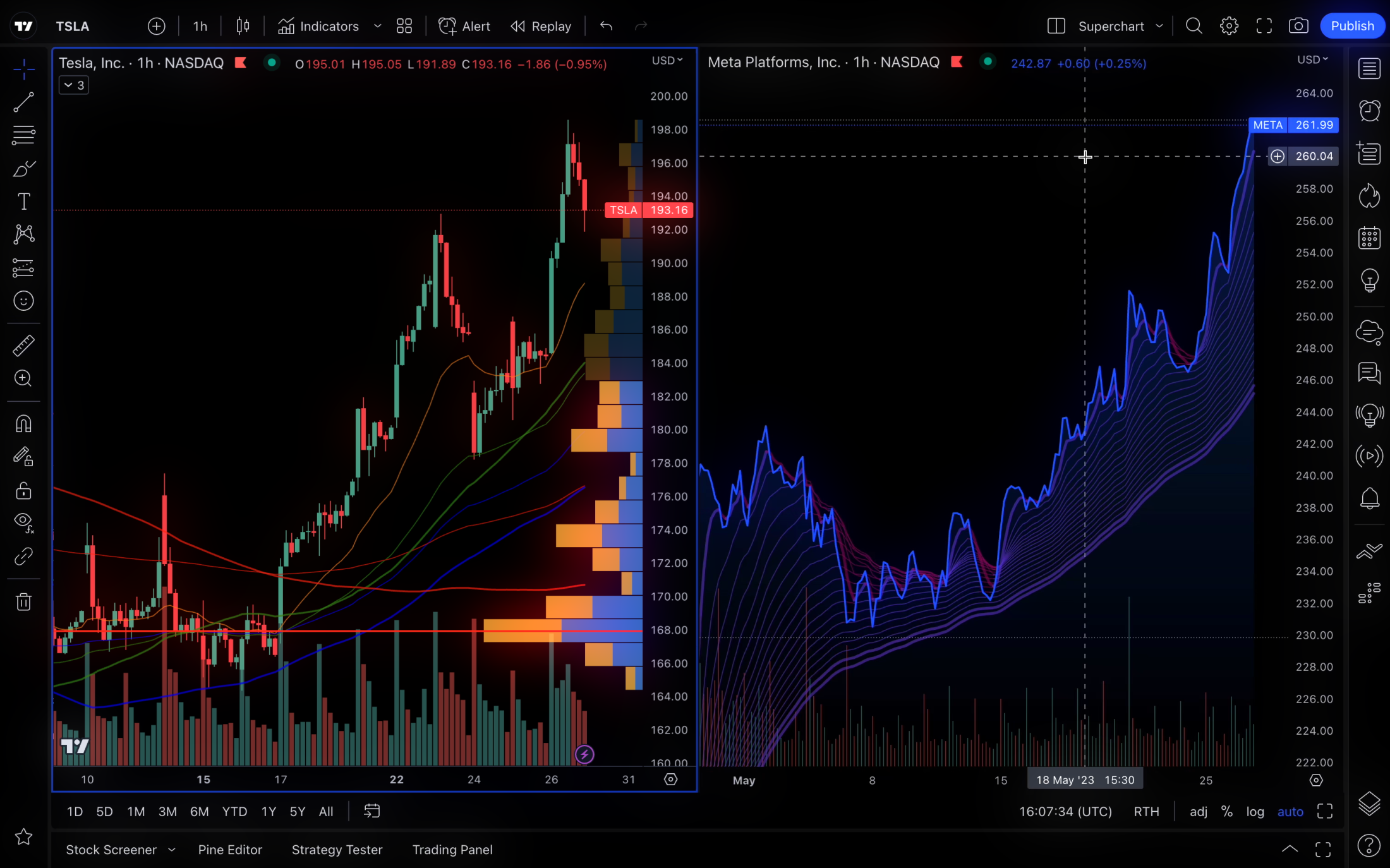
Effective market analysis requires professional-grade tools. TradingView offers best-in-class live charts, hundreds of pre-built indicators, and advanced drawing tools for stocks, crypto, and forex. It's the essential platform our analysts rely on to identify trends and track market shifts.